Central America
Nicaragua
Nicaragua bridges oceans, lakes, and volcanoes in a way that feels entirely its own. On the Pacific coast, rocky reefs and sandy bays support turtles, fish, and migrating humpback whales. On the Caribbean side, remote islands and mangroves show a ton of reef life. Inland, volcanic crater lakes offer a freshwater dive experience found nowhere else—often warm and clear, it’s steeped in geological history. Combined with its colonial cities and living Indigenous cultures, Nicaragua delivers adventure across landscapes that are still largely off the grid.
seasons
Nicaragua runs on a tropical dry/wet cycle rather than four seasons. The dry season (verano) runs roughly November to April, with December through April the most reliably rainless stretch. The wet season (invierno) runs May through October, bringing afternoon downpours rather than all-day rain, plus a short dry spell in July locals call the veranillo. The Caribbean side, including the Corn Islands, stays wetter later into the year than the Pacific side.
best time to visit
Go in the shoulder months of May-June or November rather than the December-April peak. Shoulder season cuts crowds and lodging/tour prices substantially (peak-season rates run up to 25% higher) while still delivering mostly manageable rain, lush green landscapes across the volcanic interior, and easier access to dive operators and guides who are booked solid in high season.
why people go
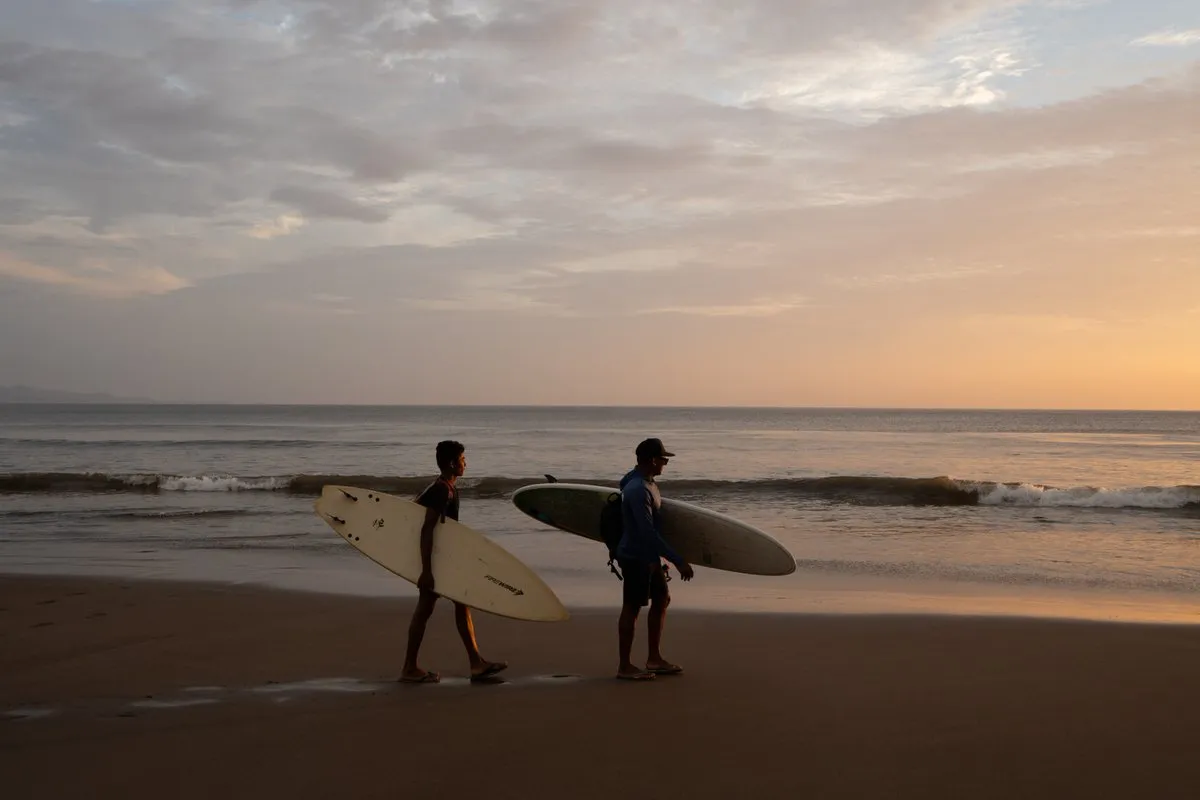
Nicaragua packs an active volcanic spine, colonial architecture in Granada and León, and a freshwater lake (Lake Nicaragua) large enough to host ocean-going bull sharks and the twin-volcano island of Ometepe. Travelers come for volcano trekking and sandboarding down the active Cerro Negro, Pacific surf breaks, and a Caribbean coast reached mainly by small plane or boat that still feels genuinely remote compared to its Central American neighbors.
marquee wildlife
Nicaragua's Pacific beaches are a globally significant nesting ground for hawksbill, leatherback, and olive ridley sea turtles, with conservation programs having cut egg poaching from nearly total loss to under 4% and released over 200,000 hatchlings. Ometepe Island, a UNESCO Biosphere Reserve, holds the largest remaining population of the endangered yellow-naped parrot along with 170 recorded bird species. The Bosawás and Indio Maíz reserves protect large stretches of rainforest supporting jaguars, tapirs, and howler and spider monkeys.
food
Gallo pinto, fried rice and beans with onion, is the everyday staple eaten at nearly every meal and anchors the desayuno típico alongside eggs, fried plantain, and fresh cheese. Vigorón, boiled yuca topped with pickled cabbage slaw and crispy pork rind and served on a banana leaf, is the classic street food. Nacatamales, corn masa and meat steamed in plantain leaves, are the traditional Sunday dish worth timing a visit around.
culture & etiquette
Nicaraguans are warm and physically affectionate in greeting but expect courtesy in return; use 'usted' over 'tú' with strangers and don't try to boss people around. Dress modestly, covering shoulders and knees, when entering churches or religious sites, and wait for the host to start eating before you do at a shared meal. Tipping isn't expected outside tourist areas but is appreciated for good service; expect blunt personal questions as normal small talk rather than rudeness.
diving
Diving and snorkeling center on the Corn Islands, Big Corn and Little Corn, roughly 43 miles off the Caribbean Mosquito Coast, where three layers of largely intact reef built from 40-plus coral species host nurse sharks, eagle rays, grouper, and lobster with visibility that can exceed 30 meters. Standout sites include Blowing Rock, a volcanic pinnacle dropping to about 80 feet, and White Holes, shallow sand patches ringed by increasingly rare staghorn and elkhorn coral. Diving is a secondary draw next to Nicaragua's volcanoes and colonial cities, more a reward for the effort of reaching a remote Caribbean outpost than the country's headline attraction, but the reef health and lack of crowds make it notable within the wider Caribbean.
for the impact solutionist or team
let's make your work more discoverable
do you have something that is or will change the world for the better?
learn morefor the conscious traveler
let's show you where we've been
are you interested in being a mindful explorer?
see where to go