Oceania
New Caledonia
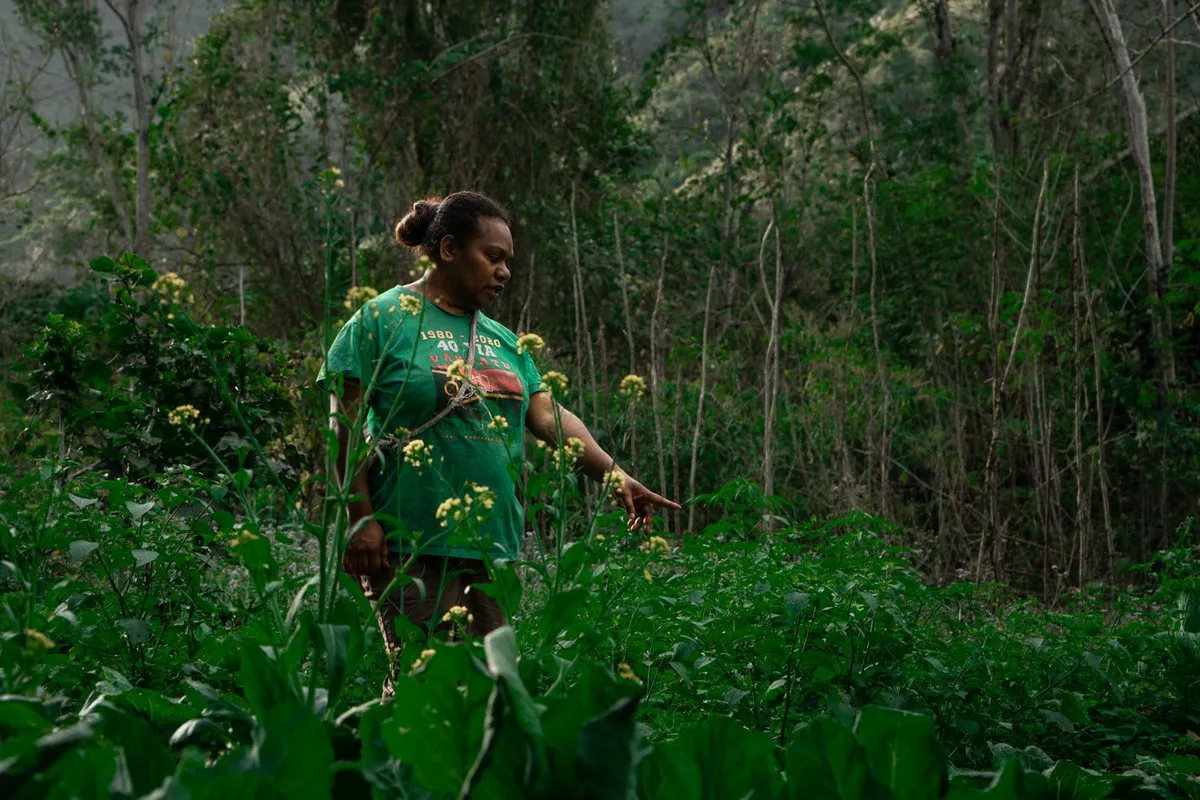
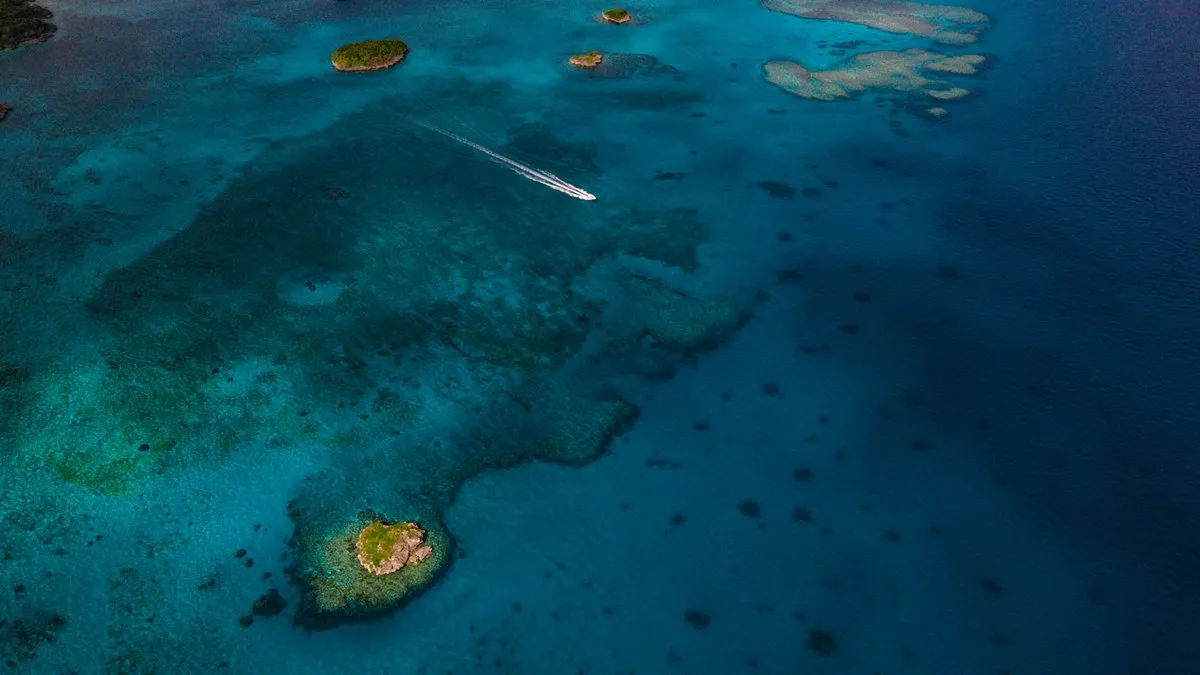
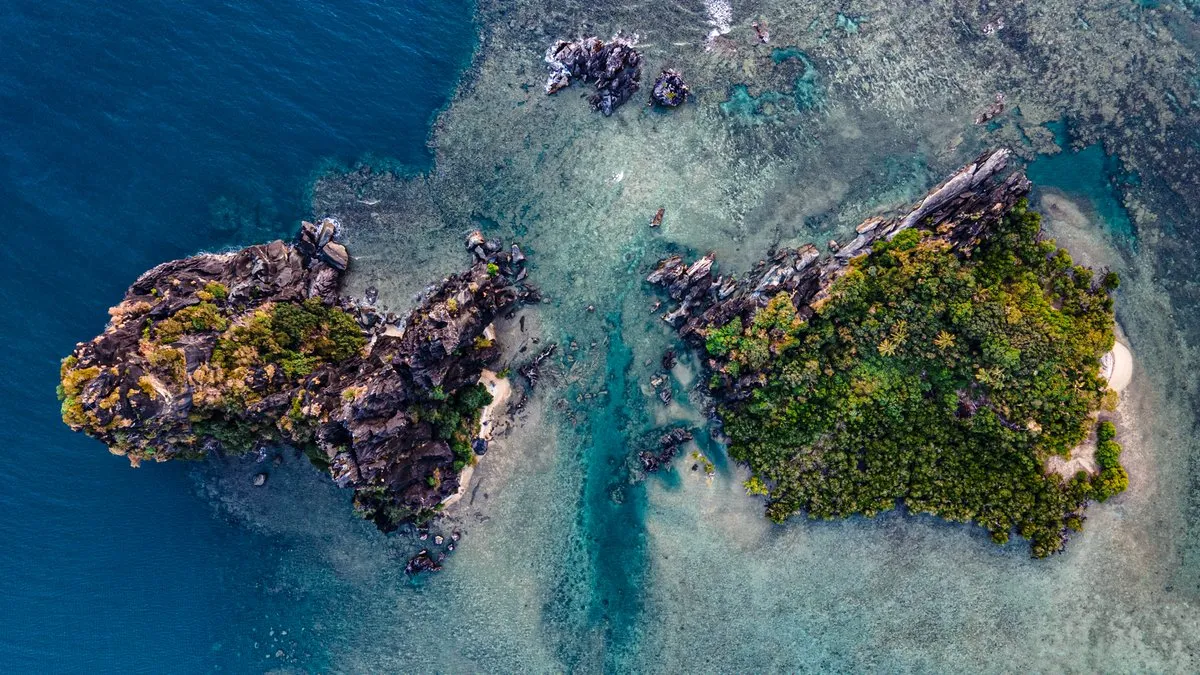
New Caledonia is unlike anywhere else in the Pacific. Its French influence layered with Kanak culture and some of the most untouched ecosystems in the region. Its barrier reef, a UNESCO World Heritage Site, is the second-largest on the planet, stretching across lagoons that shelter dugongs, turtles, and countless coral species. Inland, the island holds nickel-rich red earth, towering pines found nowhere else. It’s this unusual mix of cultures and ecosystems that makes New Caledonia complicated and stand alone.
seasons
New Caledonia sits in the subtropical South Pacific with two main seasons: a hot, humid wet season from roughly November to March (cyclone risk peaks January-March) and a cooler, drier season from April to October. Rainfall and humidity drop noticeably outside the wet months, and trade winds keep the dry season comfortable. The west coast (Nouméa side) stays drier overall than the mountainous, rainforest-heavy east coast.
best time to visit
Go in the shoulder months of April-May or October-November rather than the July-September peak. Hiking trails are more accessible with lower rainfall, temperatures and humidity are pleasant for outdoor activity, and traveling outside the July-September high season means noticeably thinner crowds and lower prices, with some reports of 20-30% cheaper rates in the surrounding shoulder window.

why people go
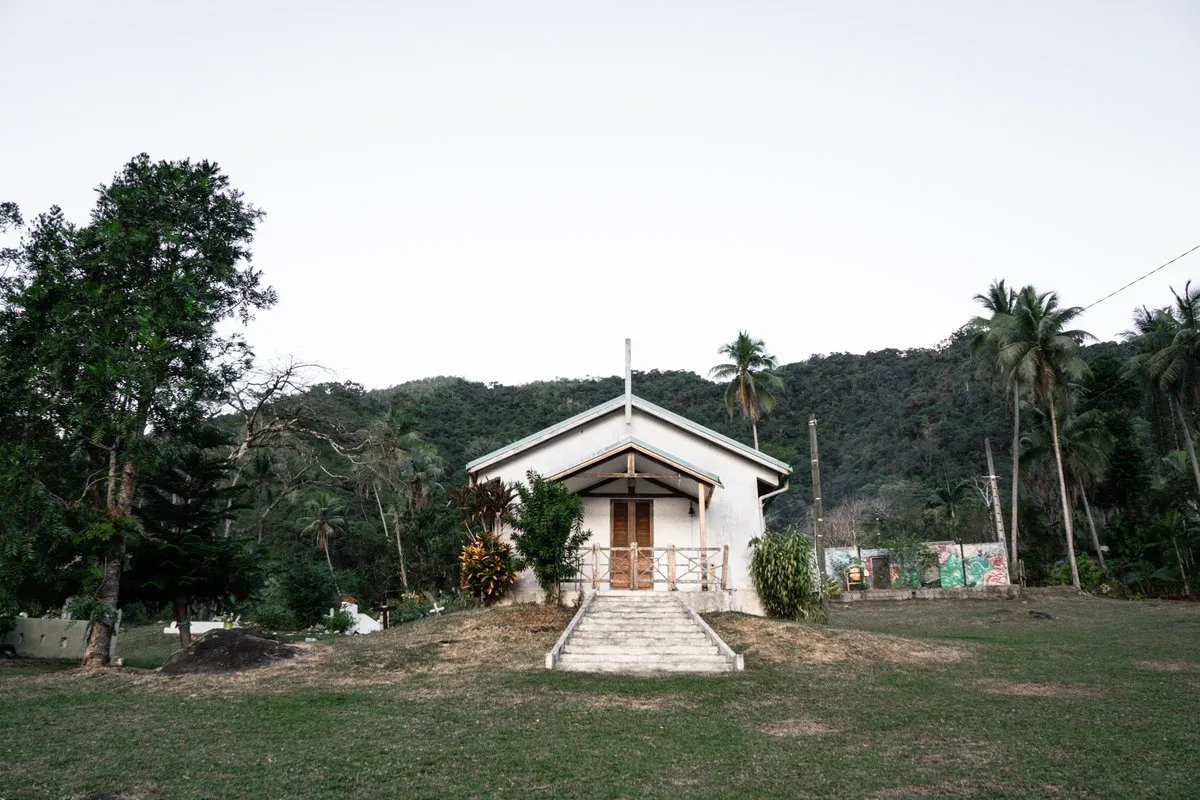
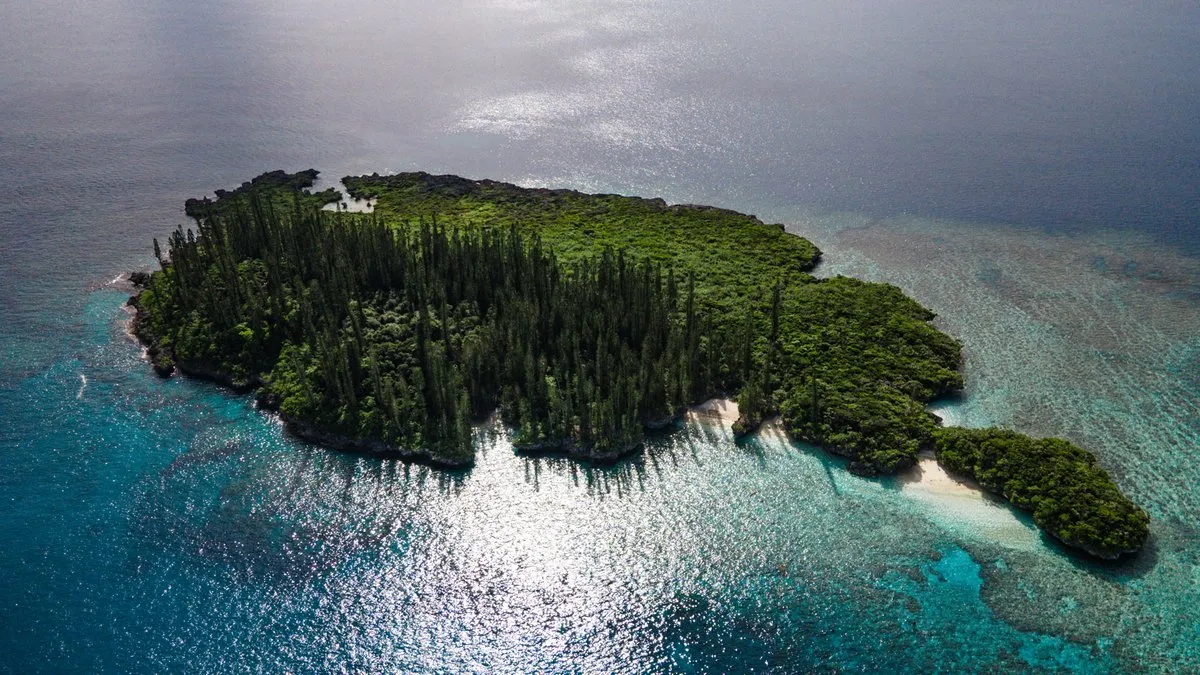
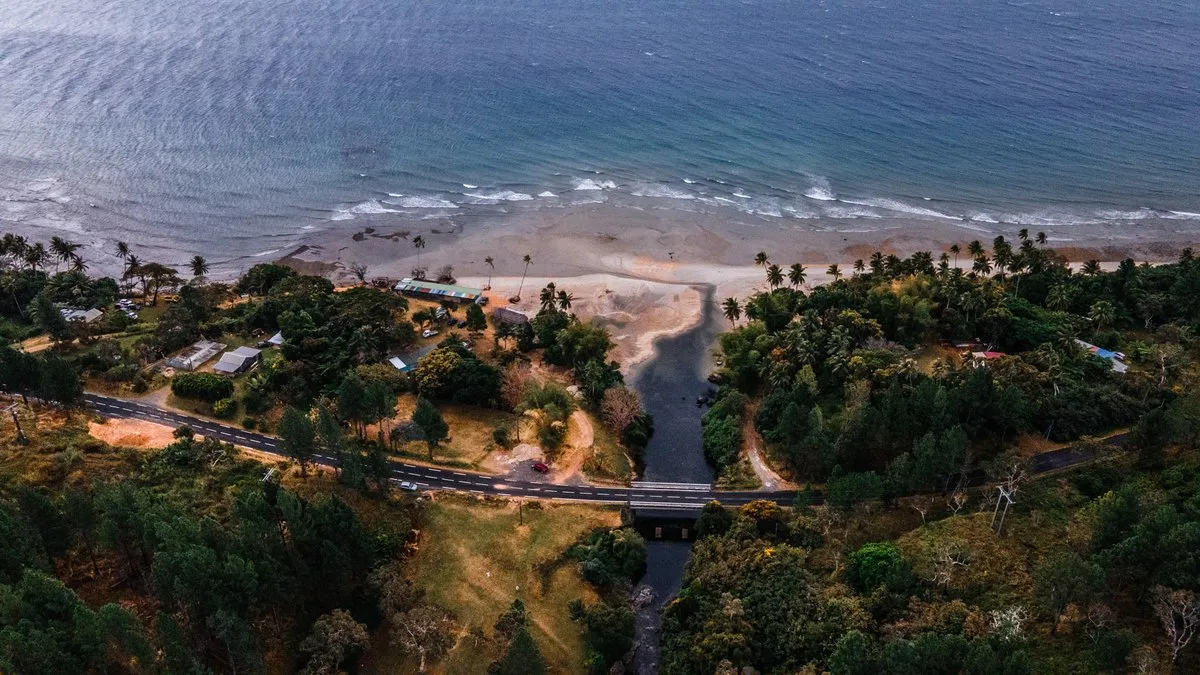
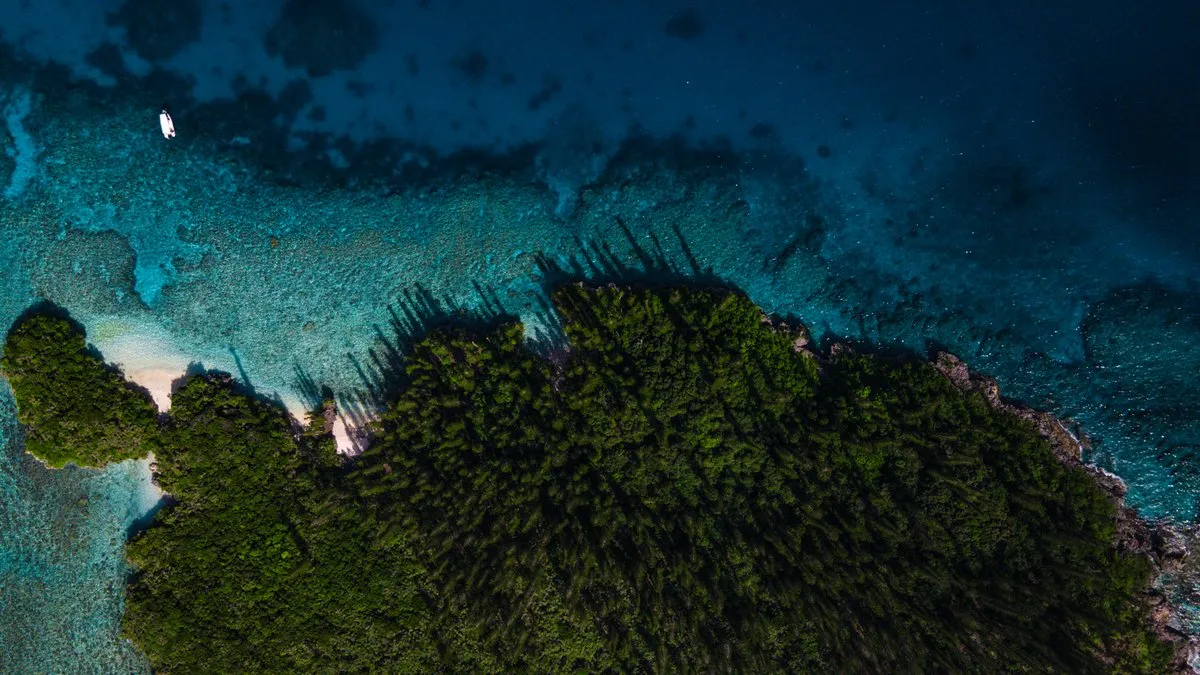
The draw is the water: a barrier reef enclosing one of the world's largest lagoons, plus surreal set-piece landscapes like the Heart of Voh, a natural mangrove and salt-flat formation shaped like a heart best seen from the air, and the Isle of Pines with its Natural Pool at Oro Bay, a reef-fringed swimming hole ringed by columnar pines. The mix of French colonial towns, Melanesian villages, and largely undeveloped outer islands gives it a different feel from other South Pacific destinations.
marquee wildlife
The lagoon holds the third-largest dugong population in the world, along with green, loggerhead, hawksbill, leatherback, and olive ridley turtles, and banded sea kraits, one of only two snake species in the territory. On land, the New Caledonian crow is notable for tool-making abilities that rival primates, and the archipelago's reptiles are overwhelmingly endemic (63 of 69 species found nowhere else), a legacy of its long isolation as a fragment of ancient Gondwana.
food
Bougna is the dish to seek out: root vegetables (taro, manioc, yam) and often chicken, pork, or seafood, wrapped in banana leaves with coconut milk and steamed for hours over hot stones, traditionally served at village gatherings. Beyond that, expect a French-Melanesian-Pacific mix: blue prawns, coconut crab, venison salad (deer were introduced and are now widely hunted and eaten), octopus salad, and reef fish. On the Isle of Pines, bulimes (local land snails) are a regional specialty.
culture & etiquette
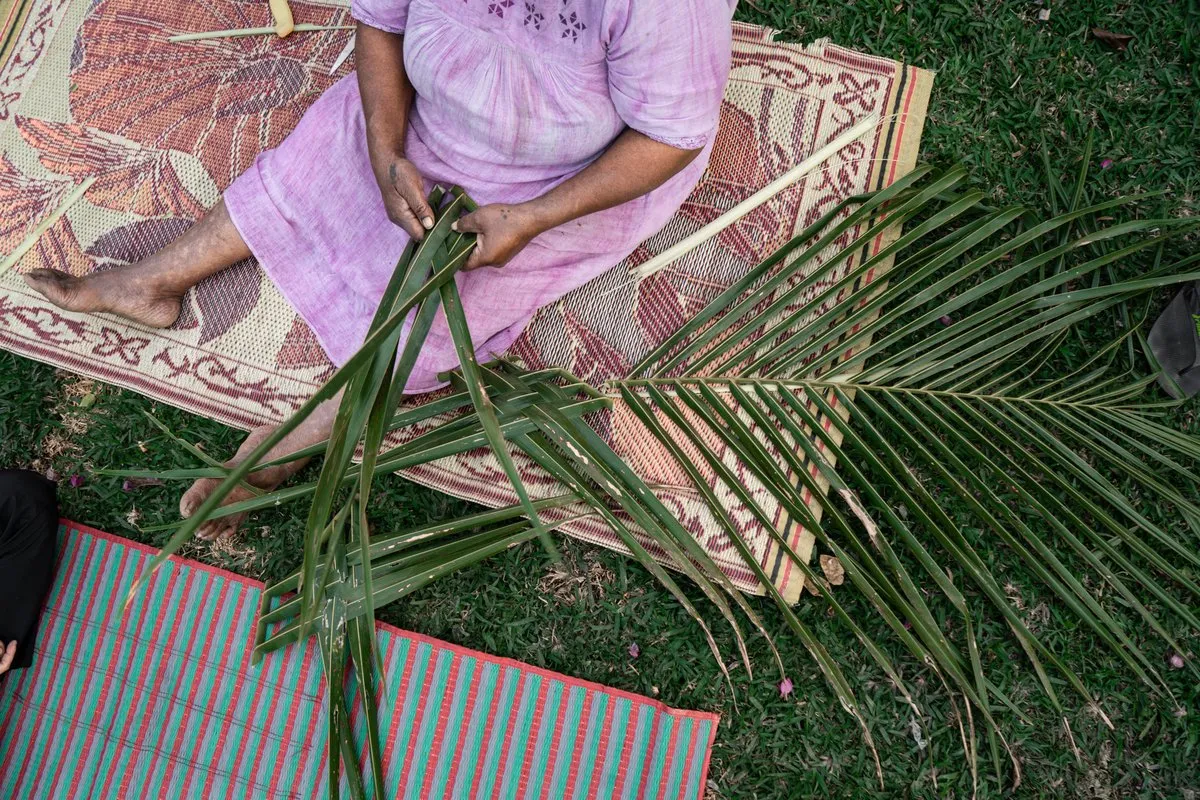
Kanak social life runs on 'la coutume,' a formal custom of verbal address and symbolic gift exchange (often a manou, a length of fabric, paired with a small cash note) that marks births, deaths, marriages, and any visit to a village or tribal land. Traditional greetings can include a soft handshake with nose-touching, and silence during a conversation or ceremony is a sign of respect, not awkwardness. Visitors should ask permission and follow coutume protocol before entering tribal land or photographing people or ceremonies, rather than treating villages as open sightseeing stops.
diving
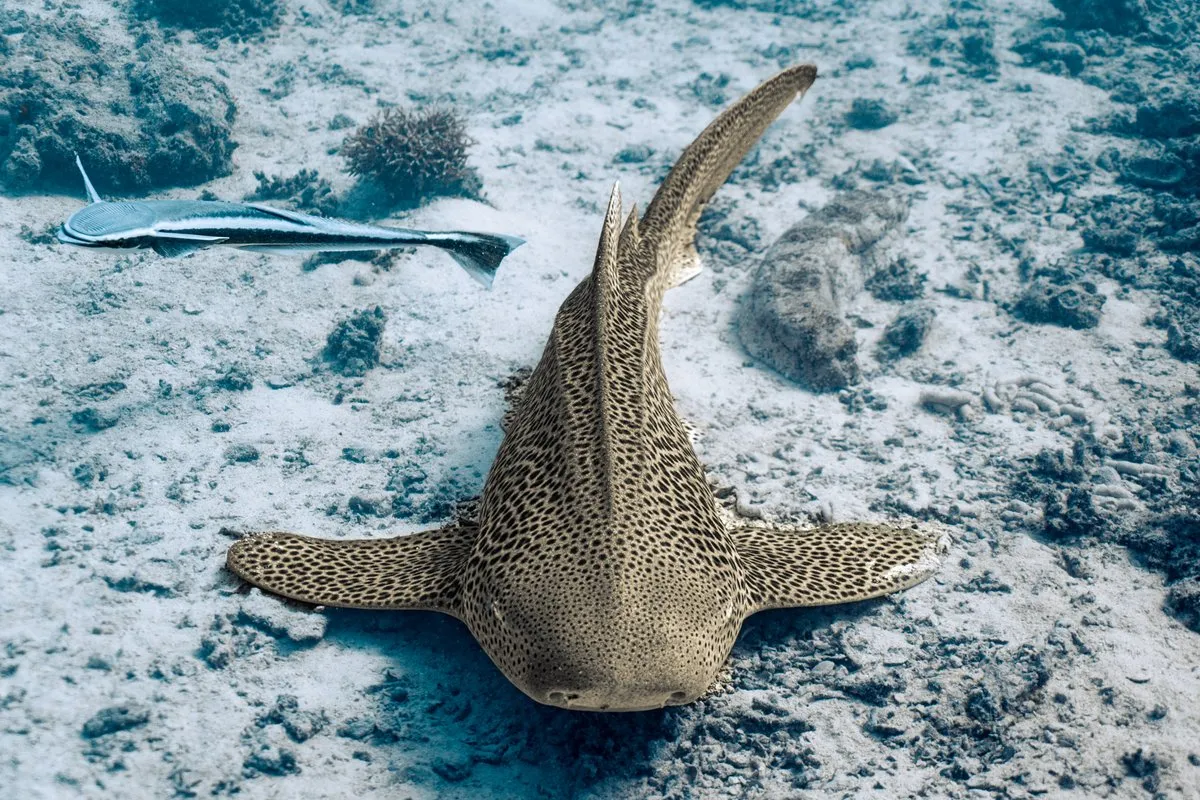
New Caledonia's lagoon and barrier reef system, the world's second-largest barrier reef enclosing roughly 24,000 km² of lagoon, was inscribed as a UNESCO World Heritage Site in 2008 across six marine clusters covering reefs, mangroves, and seagrass beds. It holds around 350 coral species and nearly 1,600 fish species, plus dugongs, sharks, manta rays, and pelagics along its coral walls and channels, with over a hundred dive sites ranging from beginner-friendly lagoon spots to more advanced outer-reef drops. The scale and near-untouched condition of the reef system is what gives the diving here its significance rather than any single famous site.
for the impact solutionist or team
let's make your work more discoverable
do you have something that is or will change the world for the better?
learn morefor the conscious traveler
let's show you where we've been
are you interested in being a mindful explorer?
see where to go